Jun
23
2023

RFK Jr., who is now running for the Democratic presidential nomination, is anti-vaccine. He will vehemently deny this, but I don’t buy it for a second. He is simply playing the, “I’m not anti-vaccine, I am pro-safe vaccine” gambit, which is disingenuous and always has been. We have been covering this topic for years, and David Gorski did a recent excellent review of this at SBM. You can’t claim not to be anti-vaccine, and then defend a long list of anti-vaccine tropes.
RFK has apparently been avoiding his views on vaccines on the campaign trail, but it always seems to come up. On the Joe Rogan podcast RFK found what he must have thought was a friendly environment, and felt free to repeat is claim that vaccine cause autism. This is a topic I have been covering for two decades – vaccines do not cause autism. But let’s do a quick review of this harmful claim.
This first appeared in the 1990, when the anti-vaccine movement hit upon the increase in autism diagnoses as a new tactic. They start with the assumption that all bad things that happen to children are caused by vaccines, so obviously they must also be causing the rise in autism. When Andrew Wakefield came out with his fraudulent and now retracted study claiming an association between the MMR vaccine and autism, he became an instant celebrity of the anti-vaccine movement. Trouble is – the MMR vaccine does not cause autism. Wakefield, it turns out, had a patent on an alternative vaccine and was trying to torpedo the competition. But the anti-vaccine movement does not let science, evidence, or basic logic get in their way. So they simply moved over to a vaccine ingredient, thimerosal, which is a mercury-based preservative.
Continue Reading »
Jun
27
2022
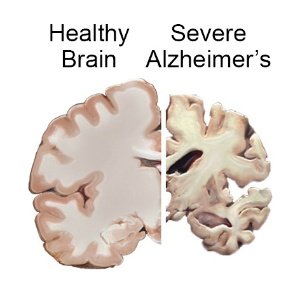 A recent large population-based study shows a significant reduction in the risk of developing Alzheimer’s disease (AD) in older adults who received one or more flu vaccines. This follows previous studies showing a similar protective effect for other adult vaccines, and raises interesting questions regarding possible mechanisms.
AD is a degenerative neurological disease which is the most common cause of dementia, which is a syndrome of chronic global cognitive impairment. The prevalence of AD is about 6.5 million people in the US. The risk of developing AD increases with age, with 10.7% of those 65 and older being affected. AD is more than just having dementia, it is a specific disease that can only be confirmed at this time by looking at the brain. There are pathological changes including plaques and tangles. Imaging can also reveal diffuse cortical atrophy (shrinkage of the brain). Electroencephalogram typically shows slowing, indicating reduced cortical activity. There are many markers of AD that can be identified in the blood or spinal fluid, but none are good enough to be used in routine clinical evaluation.
The causes of AD are complex and not yet fully understood. In brief, a lot of stuff happens on the way towards brain cells dying but it’s hard to known which stuff is driving the process and which are a result of the process. It therefore has been difficult to device treatments to slow or prevent progression. For my entire career as a neurologist it seemed as if we were getting close to a significant clinical breakthrough, but we’re still waiting. Tremendous progress has been made, but nothing that amounts to a disease-modifying treatment.
Prevention before the disease becomes clinically apparent would be ideal. We know that controlling blood pressure and other markers of cardiovascular health are extremely important in reducing the risk of AD. We also know that physical exercise is important, as well as keeping mentally active. Sometimes, however, it is difficult to separate preventive measures that actually delay or slow the onset of AD vs those that mask the onset through creating a higher baseline of cognitive function. Regardless, all of the above are good lifestyle choices.
Continue Reading »
May
07
2021
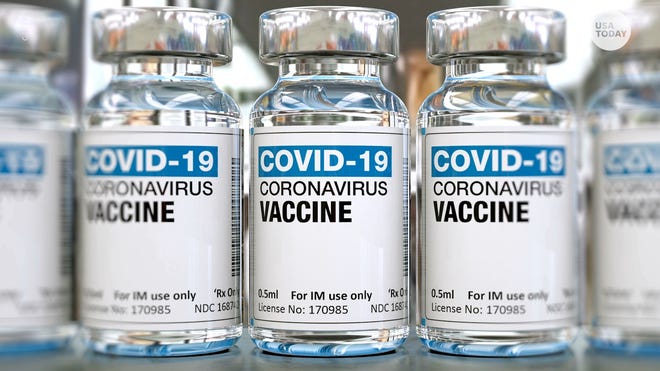 We are at a critical point in this pandemic. Worldwide the pandemic is actually more active now than ever. There have been over 156 million cases, and the world is seeing almost 800k new cases a day. The recent peak is mainly due to India, but infections continue throughout the world. The high number of cases also increases the risk of new variants emerging. India also shows us how quickly medical resources can be overwhelmed with catastrophic results. They ran out of oxygen – which is critical to keeping severe COVID patients alive.
Yet, with each wave there was the prevailing sense that this was the worst we’ll get, and now we are rounding the corner. So far, this has been wrong every time. Of course this pandemic must end eventually, the question has always been how much death, morbidity, and economic damage would it cause in the meantime. The primary reason for the next worse wave of the pandemic has largely been that people eased off on pandemic protocols. They stopped wearing masks and social distancing and started gathering in large groups. And each time the virus made us pay for it.
But now, despite being in the middle of the biggest wave so far, the situation is changing, because now we have multiple safe and effective vaccines. In the US there are two mRNA vaccines, from Moderna and Pfizer-BioNTech, in addition to the J&J vaccine. Other than a minor hiccup with extremely rare blood clots, these vaccines have a great safety profile. In states with high vaccine uptake the virus is getting under control, and restrictions are starting to be safely lifted. Life is partly getting back to normal – thanks entirely to the vaccines.
But we are facing two problem – entirely of our own making. The first is that we are in a race against time. We have to vaccinate enough of the world to achieve herd immunity before new variants emerge that are resistant to the vaccines. Also, we don’t know how long immunity from the vaccines last, but it may be something around a year. So when we get to a year out from the first vaccines given, we need to do it all over again with booster shots. Perhaps even more importantly, we are running up against vaccine hesitancy, which may ultimately prevent us from getting to herd immunity. That would be a tragedy.
Continue Reading »
Apr
15
2021
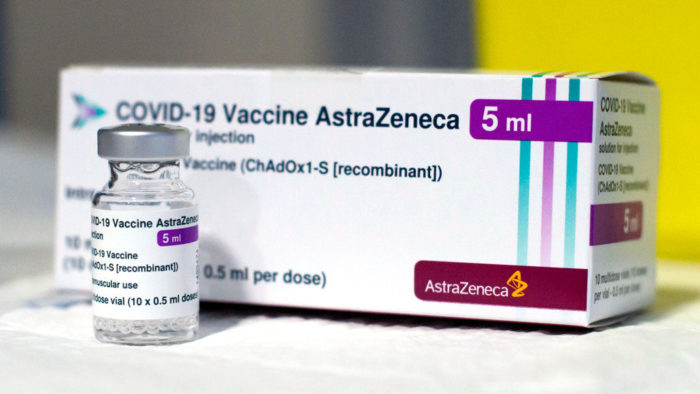 As the COVID vaccine rollout continues at a feverish pace, the occurrence of rare but serious blood clots associated with two adenovirus vaccines, AstraZeneca and Johnson & Johnson, is an important story, and should be covered with care and thoughtfulness. I have followed this story on Science Based Medicine here, here, and here. There is a lot of nuance to this issue, and it presents a clear dilemma. The ultimate goal is to optimally balance risk vs benefit while we are in the middle of a surging pandemic and while information is preliminary. This means we don’t panic, we consider all options, and we investigate thoroughly and transparently. There is a real debate to be had about how best to react to these rare cases, and as a science communicator I have tried to present the issues as reasonably as possible.
But we no longer live in an age where most people get most of their science news from edited science journalists. Most get their news online, from a range of sources, some good, some bad, some acting in bad faith or filtered through an intense ideological filter, and many just trolling. There are even “pseudojournalists” out there, reporting outside any kind of serious review. One such pseudojournalist is Paul Thacker, who recently decided he had to criticize the reporting of “skeptics” on the COVID vaccine blood clotting issue.
For background, Thacker was fired from the journal Environmental Science & Technology for showing an anti-industry bias. Bias is a bad thing in journalism, the core principle of which is objectivity. I have no idea if Thacker honestly believes what he writes or if he can’t resist trolling, but it doesn’t really matter. He has espoused anti-GMO views to the point of harassing GMO scientists, leading Keith Kloor to call him a “sadistic troll”. Thacker has also promoted 5g conspiracy theories.
Continue Reading »
Dec
14
2020
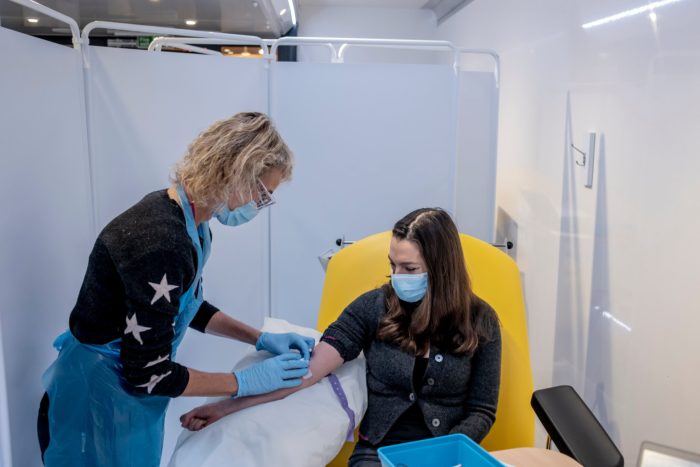
 This week should see the first people in the US to actually receive an approved (at least EUA) vaccine to prevent SARS-CoV-2. There are three vaccines currently ready to go in the West, the Pfizer vaccine which received it’s EUA in the US on Friday and was already approved in the UK, Moderna which should get approval this week, and the Astra Zeneca vaccine which should not be too far behind. The (arguably) biggest challenge has been met – a massive scientific effort to develop vaccines in record time. This has been a collaboration between government and industry, and shows what we can accomplish with sufficient motivation (which translates into both money and easing red tape).
Now we have three further challenges in front of us. The companies need to mass produce their vaccines. This is happening with about 100 million doses ready to ship. We should have another 2 billion Pfizer doses by the end of 2021, and 1.5 billion Moderna doses. We also need to distribute the doses. This is happening through collaboration among FedEx, UPS, and the military who will get the doses to hospitals and physicians, who can then administer and track the doses. So far, so good.
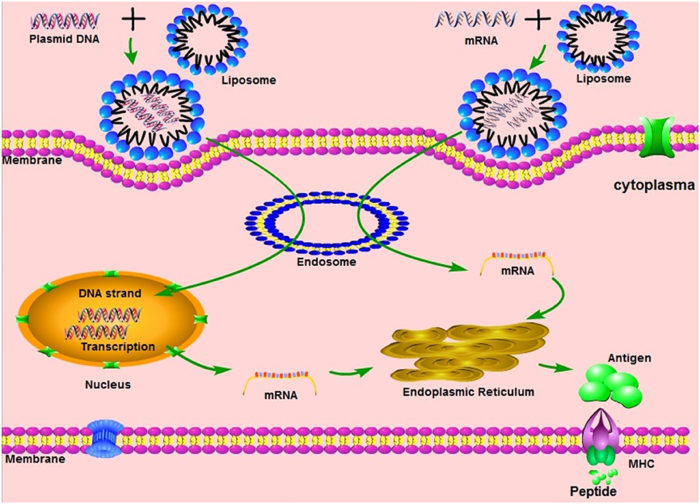
The final hurdle, however, may prove the stickiest – we need people to accept the vaccine. In a December 9th survey by the AP-NORC, only 47% of Americans said they would get the vaccine, with 26% saying they would not, and 27% saying they are not sure. These and similar results have caused some to comment that the disinformation virus may prove deadlier than the COVID virus. We have a vaccine that can protect people from a deadly pandemic – this is a no-brainer. Resistance is partly due to a dedicated anti-vaccine movement that appears immune only to logic and evidence. We can only marginalize them. But these numbers go beyond the hard-core anti-vaxxers. People also fear what they don’t know, and these are the first mRNA vaccines to hit the market. So let’s review what these are, and the safety data.
Continue Reading »
Nov
24
2020
 Two weeks ago Pfizer and German company BioNTech announced preliminary analysis of their phase 3 trial of an mRNA-based vaccine for SARS-CoV-2 showing it is 90% effective (later updated to 95%). One week ago Moderna announced that they too had promising results from their phase 3 trial, also an mRNA vaccine showing 95% efficacy. This week AstraZeneca announced they have developed a COVID vaccine as well (in partnership with Oxford University).
I have not discussed the AstraZeneca vaccine before, so here are the basic facts: “It uses a replication-deficient chimpanzee viral vector based on a weakened version of a common cold virus (adenovirus) that causes infections in chimpanzees and contains the genetic material of the SARS-CoV-2 virus spike protein.” In the study, overall there was a 70% efficacy in reducing symptomatic cases of COVID-19. However, in a subgroup analysis, those receiving a half dose followed by a full dose (instead of two full doses) had 90% efficacy, which is closer to the two mRNA vaccines. It is too early to say if this difference is real, and it does not make biological sense, so the company plans to expand the number of subjects getting this dosing regimen to see if the higher efficacy holds up. One advantage to this vaccine is that it can be stored in a regular refrigerator for up to 6 months, while the mRNA vaccines have to be frozen for transport (the Pfizer vaccine at -70 degrees C, the Moderna vaccine at -20).
All three vaccines have a good safety profile so far, but it always takes time to monitor for side effects so this is an ongoing assessment. Pfizer and Moderna say they can produce over a billion doses by the end of 2021, and AstraZeneca says they can produce 3 billion doses. That is enough for about a third of the world’s population. Of course, there are many other vaccines being developed around the world so these won’t be the only three.
Continue Reading »
May
04
2020
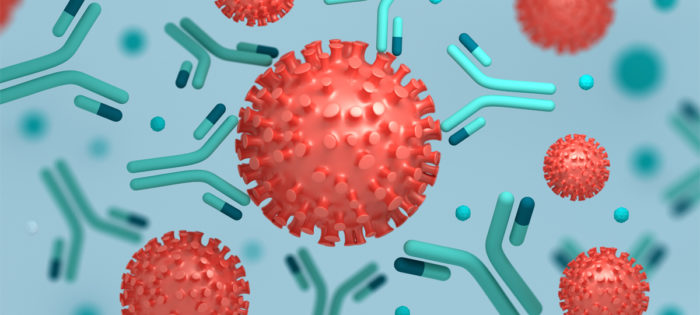 We appear to be at the beginning of the end of the first wave of COVID-19 (at least in the US – other countries are at different places). We are at the point where states are starting to relax the physical distancing requirements, and there is discussion about how to transition to the next phase. That next phase might include disease tracking, targeted isolation, and “immunity passports.” But planning this next phase is complicated by the fact that we still do not fully understand this virus. We don’t know if there will be a second wave (or more), if it is seasonal, and if you can catch it twice. How we handle this next phase will likely determine if there is a second wave.
But what comes after that? When can we transition to the final phase – return to normal, even if it is a new normal? These next transitions will depend largely on the natural immunity that results from infection, and how long it will take to create a vaccine and how effective that vaccine is. Here is what we know and don’t know so far.
The big question for the next phase is – how much immunity results from natural infection? This is a more complicated question than it may first seem. But the short answer is, we don’t know.
The adaptive part of the immune system will remember infections, B-cells that create specific antibodies targeting the infecting organism will develop throughout an infection, and some of those B-cells are memory B-cells – they will hang around for a long time, ready to produce specific antibodies the next time the same organism is encountered. But there are important variables to how effective this adaptive immune strategy is. the virus or infecting organism itself is the main variable. What parts of itself does it expose to the immune system? Perhaps the critical functional proteins are hidden deep within folds that antibodies cannot get to. Another variable is how quickly does it mutate? If the parts that antibodies can target change quickly, then immunity does not last. Some organisms also evolve specific strategies to evade or compromise the immune system.
Another variable is the severity of the infection itself. The more severe and long lasting the infection, the greater the stimulation to the immune system and the greater the adaptive response.
Continue Reading »
Aug
03
2018
 There is a strong scientific consensus that vaccines generally are an effective approach to preventing infectious illness. The vaccine schedule is arguably the most effective and cost effective health promotion intervention ever devised. Vaccines are a public health home-run.
How, then, to explain the anti-vaccine movement? The anti-vaccine movement is based mainly on science-denial and conspiracy theories. This means they spread a lot of misinformation – the bits of misinformation become articles of faith, and any evidence to the contrary is denied or dismissed.
I recently received the following question, which is framed as a sincere question, but I have my suspicions that it may not be:
Have just read your article.
I fully agree that herbal medicines/substances should have full clinical trials but can never find anyone able to refer me to
any clinical trials placebo versus substance to be tested on vaccines.
So wondered if you could help me as you are obviously a man of science.
Would be very grateful as there must have been clinical trials sometime.
Even my Dr draws a blank.
Many thanks
Pam
Pam may simply be the victim of anti-vaccine propaganda, and may simply lack all Google skills, but the phrasing strongly suggests an anti-vaxxer goading a skeptic with a “gotcha” question. Since this is a common anti-vaccine trope, let me dispel it once again.
Continue Reading »
Sep
25
2017
 Robert F. Kennedy Jr. talks with reporters in the lobby of Trump Tower in New York, Tuesday, Jan. 10, 2017, after meeting with President-elect Donald Trump. (AP Photo/Evan Vucci)[/caption]
Robert F. Kennedy Jr. considers himself an environmentalist. While advocating for the environment, he has become particularly concerned about the effects of mercury on human health. This in itself is reasonable, and there is broad scientific agreement that we should make efforts to minimize human exposure to mercury.
But Kennedy goes beyond reasonable recommendations based upon scientific consensus. He has become part of what we call, “The Mercury Militia” who have become unmoored from reality in their zeal to combat the perceived evils of mercury. The mercury militia further became tied to the anti-vaccine movement when it was claimed that the mercury in some vaccines was causing harm (it doesn’t). He has become a visible example of how someone can cocoon themselves in their own reality.
In a recent interview for Stat News Kennedy tells a number of falsehoods about vaccines. In essence he is lying, although it is possible he believes the lies he tells. Kennedy has apparently dedicated a large portion of his life to this issue, publicly advocates for his position, and certainly has resources at his disposal. And yet he gets basic facts about vaccines hopelessly wrong. How does that happen?
Paul Offit has written an excellent take down of Kennedy’s interview, explaining many of his falsehoods. For example, in the interview Kennedy claims: Continue Reading »
Sep
07
2017
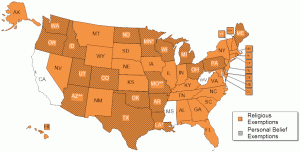 In the US routine childhood vaccination is required for entry into public school, and in some states even private school. This is a reasonable public health policy. Vaccination not only protects the individual against common infectious diseases, but when enough people get vaccinated this creates community immunity (often referred to as herd immunity) which protects everyone.
Any parent knows first hand that children are seething vectors for germs. Their concept of hygiene, generally speaking, is often not the same as the average adult. Put a large group of children together in a close environment like a school, and you have basically created a disease factory.
Further, some children cannot be vaccinated for medical reasons. They may have a chronic illness that makes their immune systems too weak to handle the vaccine, or they have an intolerance to vaccines. For these children, if they want to attend school, their only protection is the community immunity that results from all the more healthy children being vaccinated. Continue Reading »