Aug
24
2015
 I gave a talk on the vaccine controversy over the weekend. I was not surprised that a couple of audience members had a lot of questions taken directly from anti-vaccine propaganda sites. What was interesting was that they were still pushing the idea that thimerosal, a mercury-based vaccine preservative, is linked to autism.
The reason this is interesting and illuminating is that the thimerosal hypothesis is not just mostly dead, it is most sincerely dead. It is pushing up the proverbial daisies.
A Brief History of Thimerosal
Thimerosal was developed as an organomercurial anti-microbial agent shortly after World War I. It was soon discovered that it has great anti-microbial properties and was well tolerated when injected into rabbits or rats even at high doses. This made it superior to anything else available at the time.
Bacterial contamination was a serious problem for vaccines in the first half of the 20th century. Thimerosal in tiny doses, well below safety limits, proved to be an effective agent for preventing contamination. By the 1940s thimerosal was being added to several vaccines for this purpose.
Continue Reading »
Sep
13
2010
We can add one more study to the pile of evidence showing no association between exposure to thimerosal (a mercury-based vaccine preservative) and autism. The article: Prenatal and Infant Exposure to Thimerosal From Vaccines and Immunoglobulins and Risk of Autism, is published in the latest issue of Pediatrics, and shows no association between prenatal and infant exposure to thimerosal and three forms of autism – autism, autism spectrum disorder, and regressive autism.
No one study can ever be definitive, but now we have a large body of evidence from multiple studies showing a lack of association between thimerosal and autism. This won’t stop the dedicated anti-vaccinationists and mercury militia from continuing their anti-vaccine propaganda, but hopefully it will further reassure those who actually care about the science.
Background
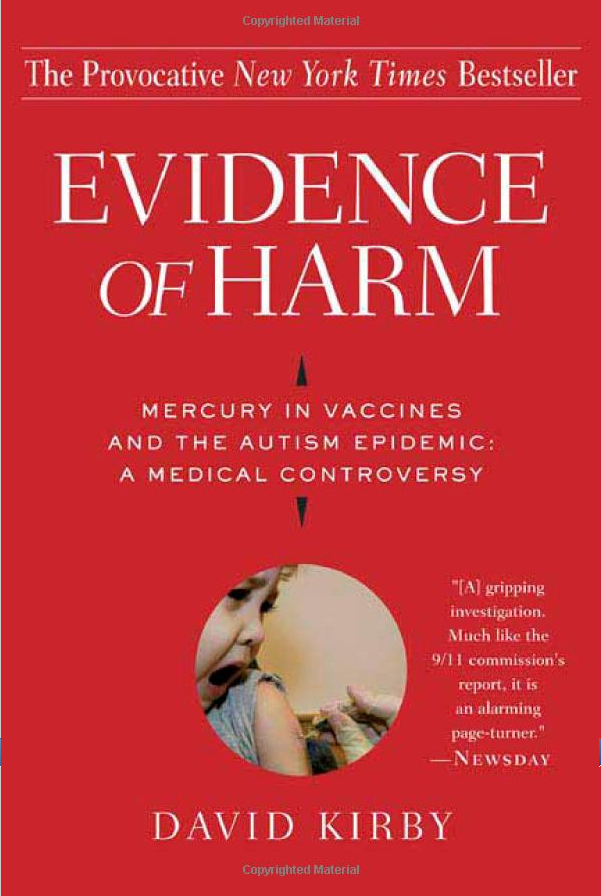
This has been a long and complex story, so let me review some of the background. Diagnosis rates of ASD have been climbing for the last 20 years, prompting some to search for an environmental cause. The existing anti-vaccine community, not surprisingly, blamed vaccines. This was given a tremendous boost by the now-discredited study by Andrew Wakefield concerning MMR (which never contained thimerosal) and autism. When the evidence was going against MMR as a cause, attention turned to thimerosal in some vaccines. This notion was popularized by journalist David Kirby in his book, Evidence of Harm.
Continue Reading »
Jan
27
2009
A new study published yesterday (Monday) in the journal Pediatrics provides more evidence against any link between thimerosal (a mercury-based preservative in some vaccines) and autism or other neurological disorders. This study adds to the large and growing body of scientific evidence for the safety of vaccines, and contradicting the claims of the anti-vaccine movement that vaccines cause autism.
The study is a bit fortuitous in that it was not originally designed to probe this question. Rather, this was a safety and efficacy study of the acellular pertussis vaccine conducted in Italy between 1992 and 1993. But it created a cohort of children who were carefully screened and monitored, and randomized to different exposures to thimerosal. This allowed the researchers to go back 10 years later to survey and examine the children for neurological disorders.
Continue Reading »
Jun
23
2023

RFK Jr., who is now running for the Democratic presidential nomination, is anti-vaccine. He will vehemently deny this, but I don’t buy it for a second. He is simply playing the, “I’m not anti-vaccine, I am pro-safe vaccine” gambit, which is disingenuous and always has been. We have been covering this topic for years, and David Gorski did a recent excellent review of this at SBM. You can’t claim not to be anti-vaccine, and then defend a long list of anti-vaccine tropes.
RFK has apparently been avoiding his views on vaccines on the campaign trail, but it always seems to come up. On the Joe Rogan podcast RFK found what he must have thought was a friendly environment, and felt free to repeat is claim that vaccine cause autism. This is a topic I have been covering for two decades – vaccines do not cause autism. But let’s do a quick review of this harmful claim.
This first appeared in the 1990, when the anti-vaccine movement hit upon the increase in autism diagnoses as a new tactic. They start with the assumption that all bad things that happen to children are caused by vaccines, so obviously they must also be causing the rise in autism. When Andrew Wakefield came out with his fraudulent and now retracted study claiming an association between the MMR vaccine and autism, he became an instant celebrity of the anti-vaccine movement. Trouble is – the MMR vaccine does not cause autism. Wakefield, it turns out, had a patent on an alternative vaccine and was trying to torpedo the competition. But the anti-vaccine movement does not let science, evidence, or basic logic get in their way. So they simply moved over to a vaccine ingredient, thimerosal, which is a mercury-based preservative.
Continue Reading »
Jan
03
2023
 Happy New Year to all my readers.
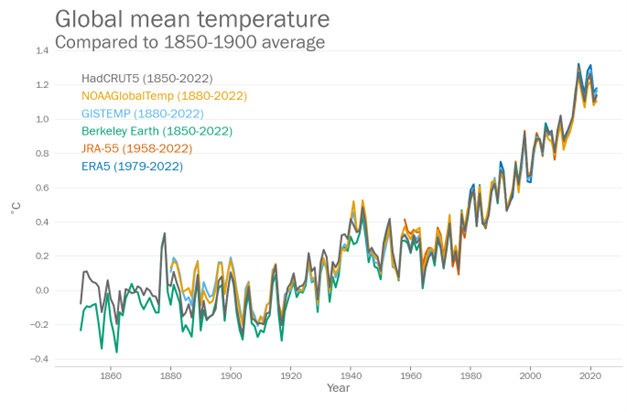
Early in each new year I like to see what the preliminary reports are for the climate over the past year. Final number crunching won’t be available for months, and it may take more than a year for the final tweaks to be reported and reviewed. But we do have a preliminary estimate of the temperature over the last year. The World Meteorological Organization reports:
The global average temperature in 2022 is estimated to be about 1.15 [1.02 to 1.28] °C above the 1850-1900 average. 2015 to 2022 are likely to be the eight warmest years on record. La Niña conditions have dominated since late 2020 and are expected to continue until the end of 2022. Continuing La Niña has kept global temperatures relatively «low» for the past two years – albeit higher than the last significant La Niña in 2011.
It looks like 2022 will be the fourth hottest year on record globally. Some specific locations had their warmest year, such as the UK and Spain (and perhaps most of Europe). As the WMO points out, we are in the middle of a La Niña cycle, which brings cooler temperatures globally. That is a short term fluctuation on the longer term trend. This also means that as we shift into an El Niño cycle we are likely to break new records.
I feel compelled to point all this out (as I am sure many scientists and science communicator will) because it is a critically important piece of information. But I also want to put it into a broader long term context. I have been engaged in skeptical activism now for 27 years, and followed many skeptical topics for longer than that. There is one extremely important pattern that emerges when you cover a topic for a long time – scientifically valid concepts tend to not only accumulate evidence but the evidence gets better and builds on itself. Meanwhile, pseudosciences do not display this pattern. They tend to go around in circles with low quality evidence. You can see this pattern across multiple disciplines.
Continue Reading »
Mar
05
2019
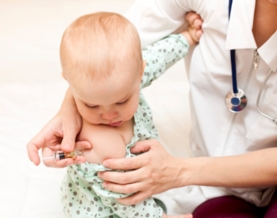 I know this is old news – or at least it should be – but it bears repeating, especially as we are in the midst of a resurgence of measles. There is no link between the mumps, measles, and rubella vaccine (MMR) and autism, or any neurological disorder. A new study confirms this lack of association. This should go a long way to reassure the vaccine hesitant that the MMR vaccine at least is safe and should not be avoided.
This is a Danish study, and the largest study of the MMR vaccine and autism to date – “657,461 children born in Denmark from 1999 through 31 December 2010, with follow-up from 1 year of age and through 31 August 2013.” They found:
During 5,025,754 person-years of follow-up, 6517 children were diagnosed with autism (incidence rate, 129.7 per 100,000 person-years). Comparing MMR-vaccinated with MMR-unvaccinated children yielded a fully adjusted autism hazard ratio of 0.93 (95% CI, 0.85 to 1.02). Similarly, no increased risk for autism after MMR vaccination was consistently observed in subgroups of children defined according to sibling history of autism, autism risk factors (based on a disease risk score) or other childhood vaccinations, or during specified time periods after vaccination.
Overall there was no association between getting the MMR vaccine and later being diagnosed with autism. Further, there was no correlation when looking specifically at children who have a sibling with autism, and therefore might constitute a susceptible subpopulation. Further still, there was no clustering of autism diagnosis following the MMR vaccine administration, as might be expected if there was a causal link. This is a very large study with an adequate study design, so that if there were any increased risk of developing autism from the MMR vaccine we should be seeing it in this data – and we don’t.
Continue Reading »
Feb
16
2017
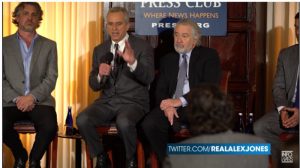 We have an anti-vaccine president. One of my concerns about Trump the candidate was that one of his most consistent positions over the years was blaming vaccines for the alleged autism epidemic (there isn’t one, by the way). Once elected it did not take long for this to manifest as a policy priority. In January Trump met with RFK Jr. to discuss him heading an Orwellian commission on vaccine safety and scientific integrity.
At a recent meeting with educators, Trump continued to express his false belief in a “tremendous increase” in autism:
“Have you seen a big increase in the autism with the children?” Trump asked Jane Quenneville, the principle of a Virginia public school that specializes in special education. Quenneville responded that she had.
Trump continued: “So what’s going on with autism? When you look at the tremendous increase, it’s really such an incredible — it’s really a horrible thing to watch, the tremendous amount of increase. Do you have any idea?”
“The autism?” Really? Continue Reading »
Jan
09
2017
This is what happens when you compromise your academic and professional integrity in order to embrace a popular fad. The Cleveland Clinic, which is historically an excellent medical institution, has the Cleveland Clinic Wellness Center, which is a center of so-called “alternative” medicine.
Such centers are a Trojan horse. They are sold to naïve academics as providing “patient centered” warm and fuzzy symptomatic treatments. Meanwhile they are really centers for pseudoscience and health fraud. They use the respected names of venerable institutions to legitimize nonsense.
The Cleveland Clinic now has to face the PR nightmare of allowing the foxes into the henhouse (actually they built a new henhouse just for the foxes).
On January 6th Dr. Daniel Neides, Medical Director and Chief Operating Officer of the Cleveland Clinic Wellness Institute, published an anti-vaccine screed on the institution’s blog. The article is full of typical anti-vaccine misinformation, and is a serious embarrassment to the Cleveland Clinic. It will also embolden the anti-vaccine movement, who can point to the article to make vaccines seem controversial and convince more confused parents not to vaccinate their children.
Continue Reading »
Feb
17
2015
 I criticize bad, biased, and or just lazy science journalism frequently, and so it’s a pleasure to occasionally have the opportunity to praise good journalism. This recent interview of Dan Burton by Anderson Cooper could be a template for how to conduct an interview over a scientific issue.
Dan Burton is a former Republican Congressman who has a long history of being anti-vaccine. He likes to repeat anti-vaccine tropes, and does so with the clueless persistence of a seasoned politician with an agenda.
Anderson Cooper is one of the few American journalists who has demonstrated his ability to do a tough and probing interview – you know, actual journalism. He demonstrated his chops again here. Specifically:
He was clearly prepped for the interview. He did his research, understood the issues, and was able to challenge Burton on specific points. You can’t go into an interview like this cold, or with only a superficial understanding of the issue. You have to know what the other person is going to say and how to respond.
Continue Reading »
Sep
12
2014
Denialism is a thing. What I mean is that denialism is a definable intellectual strategy, with consistent features that tend to cluster together. I first wrote about denialism 12 years ago, before global warming denial made the term more widespread. I pointed out that certain beliefs tend to follow the same fallacious arguments – HIV denial, creationism (evolution denial), holocaust denial, and mental illness denial. I would add now global warming denial and germ theory/vaccine science denial.
I characterized denialism as a subset of pseudoscience, one that tries to cloak itself in the language of skepticism while eschewing the actual process of scientific skepticism. But further, denialism exists on a spectrum with skepticism, without a clear demarcation in between (similar to science and pseudoscience). People also tend to use themselves for calibration – anyone more skeptical than you is a denier, and anyone less skeptical than you is a true believer.
Geneticist Sean B. Carroll (not to be confused with the physicist Sean M. Carroll) in his 2007 book, The Making of the Fittest: DNA and the Ultimate Forensic Record of Evolution, lists what he identified as the six core features of denialism. I think they make an excellent list, and would like to expand on them:
1) Cast doubt on the science.
2) Question the scientists’ motives and integrity.
3) Magnify any disagreements among the scientists; cite gadflies as authorities.
4) Exaggerate the potential for harm from the science.
5) Appeal to the importance of personal freedom.
6) Object that acceptance of the science would repudiate some key philosophy.
As you will see, all of these strategies are insidious because they are extreme versions of reasonable positions. Their underlying principles are sound, it is their specific application that is the problem.
Continue Reading »