Feb 10 2010

GM Crop Hubbub in India

Published by Steven Novella under General
Comments: 25

Much like global warming, recycling, and organic farming – genetically modified or GM foods is a scientific controversy where there is significant disagreement within the skeptical movement. People who are generally science and reason-based find it difficult to completely wrap their heads around the complex information and come to a confident conclusion. Or they find it challenging to find objective sources of information that are not filtered through political bias. Or they find it difficult to figure out what the scientific consensus is, because the experts seems to be divided.

As a result ask a room full of skeptics (all of whom agree on UFOs, bigfoot, homeopathy, and free energy) what they think about any of these topics and they are likely to give an opinion that is in line with their political ideology. Where confusion reigns, opinion is king.

This is where critical thinking skills are really put to the test – put aside ideological bias, dig through the misinformation and spin, identify the relevant issues, and try to come to a balanced assessment. And sometimes you just have to say – “I don’t know.”
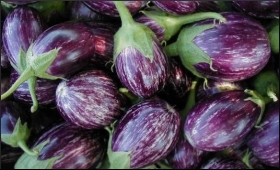
I saw this recent story on the GM crop controversy in India, so I decided to dig in and update my opinion on the whole GM crop thing. The controversy is about introducing the first GM vegetable in India – BT brinjal – a purple squash-looking vegetable. (OK – my esteemed colleague Rebecca Watson informs me that brinjal is in fact eggplant. I did not recognize it as such from the pictures attached to this story – it must be an Indian variety with which I am not familiar.) BT stands for Bacillus thuringiensis – a bacteria that makes a protein which is toxic to certain pest insects. BT pesticide has been used for years on many crops. With genetic engineering, the gene for the pesticide protein can be inserted into the genome of various plants, which will then make their own pesticide.

There is already in use BT cotton and BT corn, among other crops. The alleged advantage is that such crops have higher yields and require fewer pesticide sprayings, and so they are more cost effective. It is further claimed that this is beneficial for the environment because it reduces pesticide runoff. The BT protein has been deemed safe for non-target species, including people, and it breaks down quickly so does not hang around in the environment.

So according to proponents, it’s the best thing since sliced bread.

But surfing around PubMed turns up contradictions to just about every claim for benefit: that it does not increase yields, for example. There are also concerns about evolving resistance among target pests, but then there are also strategies to minimize this.

But the biggest controversy, which extends to all GM crops, is whether or not it has been adequately proven to be safe. This is one of those controversies that cannot be objectively resolved, because critics can set the bar for safety arbitrarily high, or proponents arbitrarily low. How much evidence is enough?

We see this in other controversies as well. The anti-vaxxers will likely argue forever that vaccines have not been adequately tested. Global warming dissidents can emphasize doubt about global warming, and the tobacco industry can claim that we really haven’t proven that smoking causes lung cancer.

On the other hand, there really isn’t sufficient evidence for cold fusion, and I think most herbal products should be tested more before they are allowed to be marketed.

Further, most fears about GM crops concern what is not known – will the genes have unanticipated consequences, will they spread into wild plants or other crops? There are also economic concerns about the notion of corporations owning crop species. On the one hand we have corporations assuring us their products are safe, and on the other we have environmentalists making some blanket condemnations. Neither extreme seems trustworthy.

Somewhere in there is an awful lot of science, but it is often conflicting and difficult to put into context.

So – I am not really sure about this one. The evidence I can find suggests that BT brinjal is probably safe, and farmers want it. I don’t buy what appears to be hysterical fears about frankenfoods, and I think many people underestimate the extent to which all crops are already the products of thousands of years of genetic manipulation through cultivation. Yet there are legitimate concerns about the true advantages of these crops and the extent of safety testing. I am leaning in favor of GM crops, and specifically BT crops, that do seem to be backed by some solid science, but it’s a tentative conclusion and I’m going to keep exploring.

For now India is putting BT brinjal on hold. They seem to be confused also – the evidence seems good, but doubts remain, and in any case the public requires more reassurance before GM food crops will be rolled out. When there is uncertainty, fear and doubt seems to win the day.
[Slashdot] [Digg] [Reddit] [del.icio.us] [Facebook] [Technorati] [Google] [StumbleUpon]
Print This Post Print This Post

25 responses so far

25 Responses to “GM Crop Hubbub in India”

  1. johncon 10 Feb 2010 at 9:58 am

    Speaking as a software developer, GM seems to be the genetic equivalent of hacking/cracking a piece of software by copy-pasting bits of code without having the nous to actually understand it in it’s entirety or write it from scratch. Only with Genetic technology there’s no-one who understands it fully, and it’s far more complex than software.

    Your comment about testing is pertinent because with adequate technology we can make predictions without need to test – Once we can understand the genome maps we’re building and simulate genesis just by looking at the code.

    Until then we could be playing a very dangerous game. We simply don’t know.

    The economic factors just add contention to the whole issue. If we use the technology for profit rather than necessity, that sets another dangerous paradigm, and demonstrates that we don’t even need it to begin with.

  2. Squidoctoon 10 Feb 2010 at 10:12 am

    The economic factors are my entire basis for not supporting GM crops. Interrupting the cycle of saving seeds and replanting the next season — a tradition as old as agriculture itself — always seems to be part of these new plants. You buy a seed and grow a plant that makes even more seeds. So simple, so beautiful. We will certainly regret it down the line if we allow that cycle to disappear.

    We’ll see how it goes: http://www.nytimes.com/2010/01/15/business/15seed.html?sq=Monsanto&st=cse&adxnnl=1&scp=2&adxnnlx=1265810610-ahmwNg4RDV0r7MmLpwIN/A

  3. erdrickon 10 Feb 2010 at 10:45 am

    Perhaps there are very creative ways to do it, but it seems like testing how safe the foods are, and how likely it is the gene will spread to non-crop plants, would be very difficult and time-consuming.

    I don’t doubt that pharmaceutical companies would love to have the FDA lower the bar for clinical testing before drugs can be introduced – we saw them hop on board the “supplement” disaster train. Likewise, I can imagine food manufacturers using all the political capital they can muster to keep testing regulations for GM foods low.

    My fear, then, is that the decision of how much and what kind of testing to require will be done from a political perspective, not a scientific one. And obviously that’s a bad idea.

  4. modoc451on 10 Feb 2010 at 11:51 am

    While I don’t support the idea of companies owning plant species, I do support the idea of feeding hungry people that live in crappy places.

    @erdrick: I thought that pharmaceutical companies supported that initiative because they own and sell most of the supplements on the shelves.

  5. theshortearedowlon 10 Feb 2010 at 12:10 pm

    I read this blog often, but comment seldom; so hello from a lurker.

    I think that many people, even sceptics, grossly underestimate how artificial modern agriculture really is. Cultivated maize/corn is one of the more extreme examples; you just need to look at pictures of wild vs cultivated strains to get a sense of it, but if you take a look inside the cell it is just as extreme.

    To generate the variation seen in modern commercial strains, plants are bombarded with UV and other radiation and mutagenic chemicals. Strains are inbred to the point of inviability, and then crossed in dizzying combinations. All to try and grow that strain which is resistant to the latest pest but doesn’t sacrifice yield. Or is salt tolerant. Or drought tolerant.

    But these varieties, which are “genetically modified” by any reasonable definition, are not subject to safety testing, either environmental or as food, beyond the liability laws.

    Frankly, the so-called “natural” processes are wasteful and potentially more dangerous. If we can take the one gene we want and insert it directly into the genome, isn’t that safer than randomly messing about with such clumsy tools as radiation? We can test to see if any unwanted genes have jumped in there as well, and we can check that the gene in question is expressing as expected. It’s so much cleaner and more scientific.

    What we need to do is to get this technology out of the hands of Big Agro (?) and be directing it to the people who need it; those trying to scratch a living in marginal soils or farmers stuck in endless cycles of spraying pesticides which work less well every year.

  6. stargazer9915on 10 Feb 2010 at 1:14 pm

    When the genes of two crops are mingled by cross pollination, we call it a hybrid and nobody says boo about it. If we splice one gene into an established crop, we call it GM and all the scary words are brought out.

    This double standard is laughable at best. We have the technology to feed the world’s hungry, yet it’s the people with full bellies that seem to be saying ’stop’.

    Earlier this week I saw a show about hybridized rice in India. They crossed a high yield type with a type that can be eaten without cooking(soaked in cold water for 45 minutes). I did not see or hear any comments about environmental disaster or major health worries. If the gene for one had been introduced to the other artificially, with the same result, would that have been the case? I think not.

    You can only test so much for so long before you know if something is good or bad (homeopathy or vaccines anyone?) for you or the environment. Let’s get the testing done and move on with the problem of feeding the hungry.

  7. Chris Shamon 10 Feb 2010 at 1:48 pm

    @Squidocto: An argument from tradition? That’s not very logical. Humans used to find it very simple and beautiful to spend their evenings watching the sunset from their crude huts. Of course, the only alternative was sitting inside the hut and not watching the sunset, which was equally simple, though perhaps not quite as beautiful. Today we can watch tv, play games, go to the gym, drive to relatively distant places to spend time with people we’d otherwise not be able to see frequently at all, talk crap online AND we still have the option of just watching the sunset, should we feel so inclined. Except now the odds of being eaten by lions and tigers and bears while we’re distracted by the sun are much lower.

    Simplicity doesn’t automatically equal idealness.

  8. HHCon 10 Feb 2010 at 1:58 pm

    My viewpoint is one of consumer. I frequently buy the large purple eggplant, bake it , and use it as an appetizer spread. Its frequently eaten that way in European countries. However, the baked purple eggplant is often bitter. I personally appreciate the much improved appearance of the GM version, and I would probably select it over its deeply purple cousin in the fruit and vegetable store. If the GM version keeps pests away and as a result succeeds in enhancing the flavor, that woud be a bonus to the consumer.

  9. johncon 10 Feb 2010 at 2:43 pm

    @stargazer9915

    Cross pollination occurs naturally and can only occur between similar species. Gene splicing is worlds apart, it is not a double standard.

    The whole point of gene splicing is that it’s far more potent, which is both good and bad.

    The technology for feeding the worlds poor has existed for thousands of years. The causes of famine are mostly political and economic in origin.

  10. trrllon 10 Feb 2010 at 4:25 pm

    BT toxin has been used in various forms as an insecticide for almost 90 years, so we know the toxin itself is not horribly toxic to humans. And it would be fairly surprising if it were, because it is a protein toxin, and our digestive tracts are pretty good at destroying proteins (albeit not infallible). So it seems pretty unlikely on general principles that it would pose any more risk than the usual risks of allergy that occasionally arise with just about any food (although biotechnology has yet to produce any food with an allergy hazard as great as for many common nuts).

  11. danzailon 10 Feb 2010 at 4:55 pm

    As has been touched on, I like the idea of GM being used to feed the world through increased productivity and such. But what use is that when we have the potential to do that now, and yet are not?

    I’m a big fan of the potential for GM, I actually worked with the largest herd of GM cows in the world (Guess where ;) ) and enjoyed it – but it’s got to be for the right reasons.

    To my mind, using GM as a way to feed world hunger is like dropping a bomb to dig a hole. Sure it’ll do the job, but what else will it do? … and why not just use the digger in the shed.

  12. Squidoctoon 10 Feb 2010 at 8:15 pm

    Chris Sham: You’re right, my post did stink a little of an argument from tradition, which I agree does not ultimately hold water. To clarify my point, the tradition I refer to (one seed yielding a plant that provides many seeds) has, until recently, never had any corporate hurdles in its way. But now many seed companies are suing farmers who try and plant the seeds the farmers themselves grew on their land — instead of buying new ones from the company. You don’t have to be a sunset-loving romantic to recognize that that is a ridiculous precedent to set.

  13. zoe237on 11 Feb 2010 at 12:43 am

    “Much like global warming, recycling, and organic farming – genetically modified or GM foods is a scientific controversy where there is significant disagreement within the skeptical movement.”

    In that case, I am becoming increasingly skeptical of the skeptic movement. I honestly didn’t know there was controversy about recycling. In the case of global warming, I know there is lots of controversy, but I didn’t know it was legitimate scientific controversy.

    Regarding GMOs, I think they are probably not harmful on a large scale, and that food activists are barking up the wrong tree when questioning their safety. However, I deplore the tactics of Monsanto et al as they patent the seeds that can be spread easily and go after small local farmers for “patent infringement.” Ridiculous. I am also skeptical that they are the solution to world hunger or any other such nonsense, particularly as seed saving is impossible (as it is in any hybrid).

  14. jacksonskepticalsocietyon 11 Feb 2010 at 1:01 am

    Zoe makes a great point about hybrid seeds that is more applicable in the 1st world than the 3rd. Saving your hybrid seeds gets you a lot of crazy looking little F3s.

    But people elsewhere save a lot of seeds. They shouldn’t be saving Monsanto seeds anyway (most are hybrid seeds).

    Any farmer getting in trouble for saving seeds is shooting themselves in the foot – as someone who grew up on a farm where GM seeds were frequently used, I know that you have to sign a LOT of paperwork that is very explicit about your promises not to save seed. Most modern, large-scale farmers do not (again, hybrid).

    The ethical standards of monsanto notwithstanding (that is, in my opinion, enough to cast doubt on many an enterprise) another problem that arises is simple: Enough BT-gene crops are going to, eventually, make pests resistant to BT. All of the fancy “square on, square off” techniques farmers use are often ignored, and will eventually fail.

    Many small-scale gardeners, organic farmers, and the thuringiensis bacillus itself use this toxin. Genetic engineering could take this capability – and a “safe” pesticide – away from us all.

    Some plants have natural colonies of thuringiensis (and I think some caterpillars/moths) to protect against predation – humans creating an evolutionary immunity to a real-life “natural toxin” would have non-human implications. (I think the above sentence would cause a naturopath’s head to explode).

    I’d love to see more environmental safety testing – not for humans, mind you, and I think it’s rather absurd that industry is fighting requirements to label GM foods.

  15. eiskrystalon 11 Feb 2010 at 4:47 am

    I honestly didn’t know there was controversy about recycling.

    Recycling in theory is a good idea. The question is whether the energy and materials needed to recycle (in a particular case) make it worth it or whether it ends up as just a cosmetic “green initiative”.

    There is always controversy in science whenever you are discussing complex systems. There is a consensus that there is global warming, and that evolution happens. Its the what, how and the why that are still being discussed. I’m assuming thats what Steve means.

    I am unimpressed with the whole farming movement towards big business, seed control and unstable ecology and monoculture. GM foods being just another product of that.

    So, I like the science, good application if it’s feeding the hungry, but don’t agree with the business aspect of it.

  16. Chris Shamon 11 Feb 2010 at 8:08 am

    @Squidocto: If it really is a hurdle (for the farmer and consumer, not the irrelevant seed), then you have a point. But I’m not convinced yet. In the US and Canada, for example, there have been a few hundred cases of Monsanto suing commercial farmers. The best known example of that was the Canadian Schmeiser case, but there Schmeiser appears to have taken large quantities of his neighbours’ GM seeds, apparently without their knowledge or consent. This wasn’t a struggling subsistence farmer, it was an established commercial producer; another evil corporation, so to speak. He hardly exemplifies the moral high ground, and I’m surprised GM opponents haven’t found a better case to publicize so heavily.

    In the developing world, I think even a huge corporation like Monsanto would have an impossible time regulating all of the 9 trillion subsistence farmers, and once GM seeds start circulating among them, the patent becomes moot. As with pirated music, it’s the small, ’subsistence’ pirate who is effectively untouchable. But that’s a whole other discussion on its own.

    Looking at Monsanto’s own PR list of justifications, some are just plain silly, but they do make one good point: It costs them a fortune to do all the research that made those seeds possible, and however noble they may try to be, they’ve still got an awful lot of bills to pay as a result, not to mention the money they’re putting into further research. So we might question their specific tactics, but until the glorious revolution does away with the need for money, it’s difficult not to sympathize with these “evil corporations” to some extent.
    http://www.monsanto.com/seedpatentprotection/monsantos_position.asp

  17. weingon 11 Feb 2010 at 12:03 pm

    I worry about Monsanto being the only one with the seeds for further planting. Isn’t that putting all our eggs in one basket? If something goes wrong with the Monsanto plant and no seeds are produced for this or other crops, we could be up the proverbial creek.

  18. Steven Novellaon 11 Feb 2010 at 1:09 pm

    Other industries have dealt with the issue of allowing companies to profit from their research, without giving them an enduring monopoly. The pharmaceutical industry, for example, has a time period from which they can profit from the $100 million or so it takes to get a drug to market. Then after the patent lapses, it is public domain.

    So just put a time limit on seed patents.

  19. zoe237on 11 Feb 2010 at 1:44 pm

    You can keep a pharmaceutical out of a person’s body, but not out of a nearby farmer’s field. If it were possible to keep seed to one field, I wouldn’t have a problem with it. To my knowledge, patent rights to life itself is a first.

    Thanks for the Monsanto link and the recycling position.

    To echo weing, I can see all sorts of problems with severely limiting the genetic variability of our food sources (think Irish potato famine or unintended consequences of antibiotic overuse).

  20. SimonWon 11 Feb 2010 at 1:53 pm

    I think the big one with GM is getting the genie back in the bottle.

    Several crops have already had their status changed adversely, or were authorized for use in animal feeds only. Anyone who thinks these genes which are novel to the species in question will disappear when we change are minds has no idea how hard it is to get rid of weeds. Animal feed only crop genes are readily and commonly found in human feed stuffs.

    Heck DDT is still in use, and it is banned globally except for limited public health uses, and it needs to be manufactured and sold, rather than reproducing naturally.

    This I think justifies an extremely high bar to entry, especially given the evidence that resistance can develop very quickly. As was noted in trials of some herbicide resistant crops (it should be noted some of the weeds are closely related to the crops themselves, which means they can cross breed which speeds the spread of herbicide resistance, probably harder for insects). The problems may well stem from the spread of technology, where determined individuals can do it in their garage, and over regulation of good providers may push the release of products to places with the least oversight. Plant genes on the other hand don’t care about political borders.

  21. daedalus2uon 11 Feb 2010 at 2:14 pm

    Johnc is correct, that putting extra genes in crops is (somewhat) like putting extra code in a program. But it needs to be appreciated that the genome of the crop in question already has 50,000+ genes that are mostly unknown. Is a crop with 50,000+ unknown genes somehow safer than a crop with 50,000+ unknown genes plus one known gene?

    To me, the risk is in the unknown genes, which have never been tested or analyzed, other than by growing crops and eating them.

  22. CivilUnreston 12 Feb 2010 at 7:41 pm

    In response to the worry about “forcing” farmers to buy seeds every year:

    most farmers in developing countries WANT to be able to grow GM crops. They have poor (if any) irrigation, terrible pests, little money for fertilizer and unpredictable weather.

    Regardless or desire, jacksonskepticalsociety is correct, farmers who DON’T use GM crops generally buy “traditionally” bred or modified hybrid seeds every year anyway.

    From Stewart Brand’s book (Whole Earth Discipline: An Ecopragmatist Manifesto; a book I highly recommend for anyone looking to convince an environmentalist that organic farms are wasteful, cities are awesome and nuclear power is necessary):

    “The fear that GE sterility technology would require the annual purchase of seeds is less novel and less alarming when viewed in the context of standard agricultural practice. Most farmers buy vigorous new hybrid seeds every year and have for decades.”

    Here are his footnotes:
    http://web.me.com/stewartbrand/DISCIPLINE_footnotes/5_-_Green_Genes.html

  23. Scott D.on 14 Feb 2010 at 2:37 pm

    I think that GM crops have an enormous potential for good.

    My biggest concern is that Monsanto and other GM crop producers are stifling research by denying scientists access to GM seeds, or not allowing the publication of unfavorable results. Until open access is allowed I’m unwilling to take a stand on safety and productivity because the information is biased.

    http://www.scientificamerican.com/article.cfm?id=do-seed-companies-control-gm-crop-research

  24. kevinfon 17 Feb 2010 at 7:06 am

    I have made GM plants for 25 years, and their long-term target is to provide greater yields with fewer inputs and less environmental impact. I speak about this topic 12 times a year in whole foods coops, classrooms and other venues. Just so you know where I’m coming from…

    First, I’m very taken back by Steve’s comment, “But the biggest controversy, which extends to all GM crops, is whether or not it has been adequately proven to be safe.” We can’t prove that anything is safe; we can only show evidence of harm. There is none associated with Bt crops or GM in general.

    Others on this board suggest that “If GM was favorable you’d see more of it”. How about 98% of soybean acreage in the USA? It works, farmers love it, and make more money from it. It finally makes their job sustainable.

    Scott D is surprised that Monsanto/DowAgro etc do not allow others access to their seeds. Try to get the recipe from Coca Cola from that company. See if a pharmaceutical company will share their proprietary synthesis protocols. Good luck! Transgenic seeds are take tens of millions of dollars to produce and get approved. They help farmers and feed people. Why should they have to reveal their secrets?

    Try to get elite germplasm used in top-selling hybrids. You’ll NEVER get it.

    And as far as GM stops farmers from saving seeds… they could save seeds, just not GM seeds. Nobody is making them grow GM. They grow GM because it makes them more money and is better for the environment.

    And high points to those that point out that most of domesticated crops have been “engineered” by intense selection, induced mutation, wide crosses with wild materials, induced polyploidization, and a host of other factors that NEVER would have happened naturally. Everything you eat has had 30,000 genes affected in ways that mother nature never intended.

    Looking forward 30 years GM will be the staple everywhere, probably intertwined with organic crop production. The two are complementary and have the potential to feed more people on fewer resources and with less impact on the planet.

  25. johncon 17 Feb 2010 at 10:11 am

    kevinf,

    So I have to eat foods you say are safe, that you have a vested interest in promoting and that you’d comply with having their ingredients kept secret?

    It’s complacent sentiment like that which will destroy the GM industry. Please carry on. We need more of you.