Mar
05
2019
 I know this is old news – or at least it should be – but it bears repeating, especially as we are in the midst of a resurgence of measles. There is no link between the mumps, measles, and rubella vaccine (MMR) and autism, or any neurological disorder. A new study confirms this lack of association. This should go a long way to reassure the vaccine hesitant that the MMR vaccine at least is safe and should not be avoided.
This is a Danish study, and the largest study of the MMR vaccine and autism to date – “657,461 children born in Denmark from 1999 through 31 December 2010, with follow-up from 1 year of age and through 31 August 2013.” They found:
During 5,025,754 person-years of follow-up, 6517 children were diagnosed with autism (incidence rate, 129.7 per 100,000 person-years). Comparing MMR-vaccinated with MMR-unvaccinated children yielded a fully adjusted autism hazard ratio of 0.93 (95% CI, 0.85 to 1.02). Similarly, no increased risk for autism after MMR vaccination was consistently observed in subgroups of children defined according to sibling history of autism, autism risk factors (based on a disease risk score) or other childhood vaccinations, or during specified time periods after vaccination.
Overall there was no association between getting the MMR vaccine and later being diagnosed with autism. Further, there was no correlation when looking specifically at children who have a sibling with autism, and therefore might constitute a susceptible subpopulation. Further still, there was no clustering of autism diagnosis following the MMR vaccine administration, as might be expected if there was a causal link. This is a very large study with an adequate study design, so that if there were any increased risk of developing autism from the MMR vaccine we should be seeing it in this data – and we don’t.
Continue Reading »
Feb
16
2017
 We have an anti-vaccine president. One of my concerns about Trump the candidate was that one of his most consistent positions over the years was blaming vaccines for the alleged autism epidemic (there isn’t one, by the way). Once elected it did not take long for this to manifest as a policy priority. In January Trump met with RFK Jr. to discuss him heading an Orwellian commission on vaccine safety and scientific integrity.
At a recent meeting with educators, Trump continued to express his false belief in a “tremendous increase” in autism:
“Have you seen a big increase in the autism with the children?” Trump asked Jane Quenneville, the principle of a Virginia public school that specializes in special education. Quenneville responded that she had.
Trump continued: “So what’s going on with autism? When you look at the tremendous increase, it’s really such an incredible — it’s really a horrible thing to watch, the tremendous amount of increase. Do you have any idea?”
“The autism?” Really? Continue Reading »
Jan
24
2017
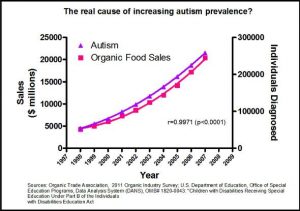 One of the pillars of the anti-vaccine movement over the last two decades is that we are in the midst of an “autism epidemic” because autism incidence has dramatically increased over this time. This increase calls for an explanation, which, of course, they believe must have something to do with vaccines.
Like all beliefs and movements disconnected from real science, this is a simplistic and invalid approach to a complex science, in this case epidemiology.
In medicine we are very interested in how disease rates change over historical time, and among various locations and demographics. Such information provides critical clues to the etiology (causes) of disease and the effects of various risk factors and treatments. There are many things that can change the incidence (new diagnoses over time) and prevalence (number of people with a diagnosis at any one point in time) of a disease, including the way we make and record such diagnoses.
This is always the critical question when following disease incidence over time – are there any artifacts in how we are collecting data. Are the changes in the numbers reflecting a real biological change in the population, or just a change in the behavior of physicians?
Those who warn about an “autism epidemic” are not asking these questions. They are taking the numbers at face value, because they serve a rhetorical purpose.
Continue Reading »
Aug
24
2015
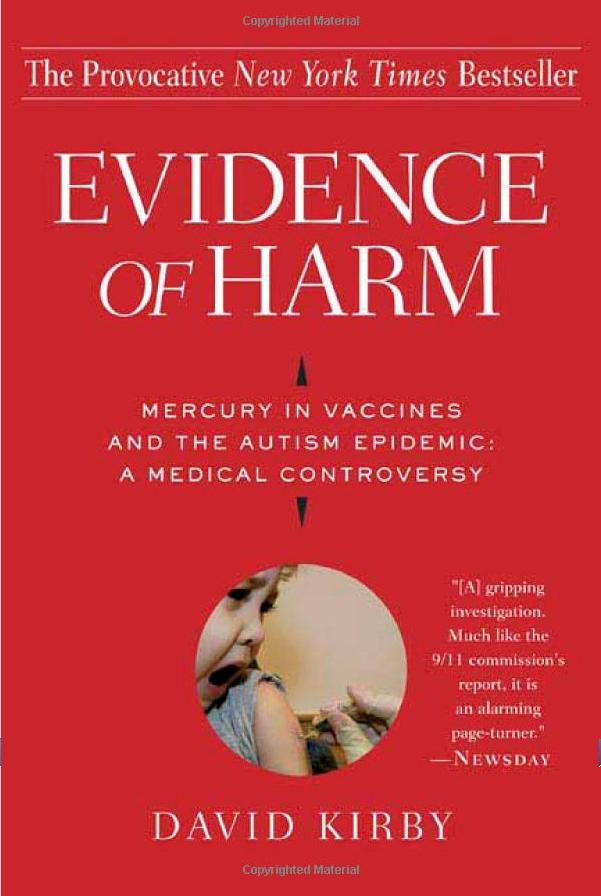 I gave a talk on the vaccine controversy over the weekend. I was not surprised that a couple of audience members had a lot of questions taken directly from anti-vaccine propaganda sites. What was interesting was that they were still pushing the idea that thimerosal, a mercury-based vaccine preservative, is linked to autism.
The reason this is interesting and illuminating is that the thimerosal hypothesis is not just mostly dead, it is most sincerely dead. It is pushing up the proverbial daisies.
A Brief History of Thimerosal
Thimerosal was developed as an organomercurial anti-microbial agent shortly after World War I. It was soon discovered that it has great anti-microbial properties and was well tolerated when injected into rabbits or rats even at high doses. This made it superior to anything else available at the time.
Bacterial contamination was a serious problem for vaccines in the first half of the 20th century. Thimerosal in tiny doses, well below safety limits, proved to be an effective agent for preventing contamination. By the 1940s thimerosal was being added to several vaccines for this purpose.
Continue Reading »
Nov
07
2013
Part of the impetus for the fringe belief that vaccines are somehow causally related to the development of autism is that the signs of autism often become apparent at 2-3 years of age, after children have received many of their routine childhood vaccinations. (Average age at diagnosis is 3.1 years.) In an otherwise healthy child, the vaccines might be the only thing the parents can think of that could be a potential cause.
Signs of autism are not clinically noticeable prior to 6 months of age. From about 6-18 months the signs can be detected by careful clinical observation, but may be missed by parents. During this time parents may become slowly aware that their child is not developing as expected, and the creeping suspicion that something is not quite right often culminates in a diagnosis between age 2-3.
The phenomenon of temporal binding may then cause the parent’s memories to shift over time so that the temporal correlation between getting vaccines and signs of autism appearing become closer together. For some parents this can become a very powerful memory – my child was perfectly normal, then he received vaccines and started to show signs of autism.
Continue Reading »
Jul
29
2013
Facebook is like a graveyard in a zombie movie, where old news items rise from the dead to have a second life. I am often asked about news items that are burning up Facebook, only to find that they are years old, but never-the-less they have to be addressed all over again. ]
One such item (actually a few items) is a 2012 news report about the Italian courts awarding money to the Bocca family a large reward because it concluded their 9-year-old son acquired autism from the MMR vaccine.
History here is a useful guide. The courts have historically often been out-of-step with the science, tending to err on the side of awarding compensation for possible harm. For example, until about the 1920s it was thought that physical trauma could cause cancer. Animal studies and epidemiological evidence, however, showed that there was no causal connection. Recall bias and increased surveillance were likely the cause of the apparent association.
Continue Reading »
Apr
03
2012
From time to time celebrities publicly discuss their opinions on scientific topics, and the results are usually not pretty. I have discussed previously the folly of Jenny McCarthy, for example, in using her dubious celebrity to promote anti-vaccine nonsense. Now The Donald has joined the ranks of people who are mostly famous for being famous who feel their celebrity gives them license to pontificate publicly about complex scientific issues. Trump told a Fox News audience that he strongly believes vaccines are causing the increase in autism diagnosis. He based this upon his scientific training, thorough reading of the relevant scientific literature, and consultation with experts – no, I mean based upon his casual observation and naive assumptions. Hey, he has an anecdote.
Here is the core of his rant:
“I’ve gotten to be pretty familiar with the subject. You know, I have a theory — and it’s a theory that some people believe in — and that’s the vaccinations. We never had anything like this. This is now an epidemic. It’s way, way up over the past 10 years. It’s way up over the past two years. And, you know, when you take a little baby that weighs like 12 pounds into a doctor’s office and they pump them with many, many simultaneous vaccinations — I’m all for vaccinations, but I think when you add all of these vaccinations together and then two months later the baby is so different then lots of different things have happened. I really — I’ve known cases.”
OK, it’s easy for a lay person to get caught up in a complex scientific question and get overwhelmed by information from one side. If you naively watch Loose Change, for example, without being familiar with the whole 911 conspiracy thing you might be led to believe there is something sinister going on. That’s how propaganda of that sort often works – overwhelm your audience with factoids, distorted and cherry-picked information, and apparent correlations and weave them into an emotionally compelling story. If you listen to just one side of any scientific debate you will probably be convinced that that side has a strong and perhaps even iron-clad case. Only when the other side has an opportunity to make their case do you see how the information you were given was systematically biased in one direction.
Continue Reading »
Feb
17
2012
Yet another study showing that clear signs of autism are present as early as six months of age has been published. In this study researchers looked a high-risk children (siblings of children with autism) at 6 months with MRI scanning (specifically diffusion tensor imaging) and then evaluated them clinically at 24 months to see which children met criteria for autism spectrum disorder (ASD). Some of the children also had imaging at 12 months. The imaging was used to look at the development of white matter – the tracks in the brain that contain the axons or pathways of communication.
When compared as groups the 28 infants who went on to develop ASD had significantly decreased white matter development in 12 of 15 brain pathways examined in comparison to the 64 infants who did not develop clinical ASD. These results are very robust, although I should point out that the children were compared as groups, not individuals. The purpose of this study was to see if there were detectable changes in the brains of children with ASD at 6 months, not necessarily to explore its utility as a diagnostic tool that can be applied to an individual.
Still, this study supports other research providing increasing evidence that ASD begins at least as early as 6 months. It is probable that ASD begins earlier than 6 months, actually, because in order for detectable differences to be present in the brain, development must have been heading down a different trajectory prior to that. These kinds of studies have not looked at children younger than 6 months, and it would be interesting to see how early such changes can be detected. But even without that data, we can conclude the whatever process results in ASD it is active prior to 6 months so that the effects are detectable at 6 months.
Continue Reading »
Feb
16
2012
Another study, published recently in PLoS One, fails to show a correlation between mercury and autism. This was a study of mercury excretion in the urine, comparing subjects with autism to their siblings as well as controls without autism spectrum disorder (ASD), both in mainstream and special schools. They found no significant difference among the groups, even controlling for kidney function (creatinine clearance), age, gender, and amalgam fillings.
To put this study into context – there are those who claim that mercury toxicity is what causes ASD, and in fact ASD is simply misdiagnosed mercury toxicity. There is no question that mercury is indeed a neurotoxin, but toxicity is all about dose, so the question is are children being exposed to mercury in high enough dose to cause toxicity. Further, it is difficult to extrapolate from preclinical studies (in test tubes and petri dishes) to living organisms. We need to further know what happens to the toxin in the body, and how the body handles it.
With regard to the forms of mercury found in some vaccines (although much less than in previous years) and tuna fish, the body seems to rid itself of the mercury sufficiently quickly to prevent build up to toxic levels. Of course, this remains a hot topic because of the persistent claims by the anti-vaccine movement that vaccine cause ASD, and some who cling to the discredited notion that it is mercury in vaccines that is the culprit. There are also the so-called “mercury militia” who blame environmental mercury (from vaccine and elsewhere) on all human illness, not just autism.
As further background, it’s helpful to note the chain of argument that has occurred with respect to the role of mercury in autism. Studies have consistently found no correlation between mercury exposure and the risk of ASD. Proponents of the mercury hypothesis have therefore argued that there is a subpopulation of vulnerable children who metabolize and excrete mercury differently than the general population, and it is within this subpopulation that mercury causes ASD.
Logically this may be true, but the argument is little more than special pleading, although a common one. Scientists are familiar with the usual list of special pleading arguments made to dismiss negative evidence. These include: that the dose studied was too low, the treatment duration was too short, the placebo or comparison treatment was also effective, or the looked-for effect only exists in a subpopulation. Each one of these arguments is logically consistent – if true they would explain the negative results without meaning that the phenomenon is not true. They may even be true in specific cases. What makes them special pleading is when they are invoked ad hoc to explain negative evidence without good justification.
Continue Reading »
Jun
09
2011
The recent issue of Neuron has a series of articles providing more information about the genetics of autism spectrum disorder (ASD). ASD is characterized by decreased social ability as a core feature, with other clinical features being variable. It is also not a single disease or disorder, and not just because of the spectrum of clinical features. Like many clinical entities, there can be many underlying causes that result is similar-looking clinical effects.
While debate rages as to possible environmental triggers or even causes of ASD, researchers have been slowly building a picture of ASD as a complex genetic syndrome. Literally hundreds of genes have been potentially implicated. Many of the genes linked to ASD are involved with brain proteins or brain organization.
The recent studies in Neuron look specifically at families with a single child with ASD. In families with multiple children, or with a parent and child on the spectrum, the disorder is likely inherited. But what of families with only one child with ASD, and at least one child without, with no affected parent? Such a pattern can also be consistent with an inherited disorder, if it is recessive or X-linked. In a recessive disorder both parents can be unaffected carriers, and 25% of children will be affected – so having a single affected child is not unusual. However, ASD genes tend to be dominant, which means at least one parent should be affected along with at least 50% of children.
Continue Reading »